Launch the Lunar New Year with this Easy , Vibrant Vegan Lo Mein
This savory, slippery, umami-rich noodle dish is quick, simple, and packed with vibrant veggies!
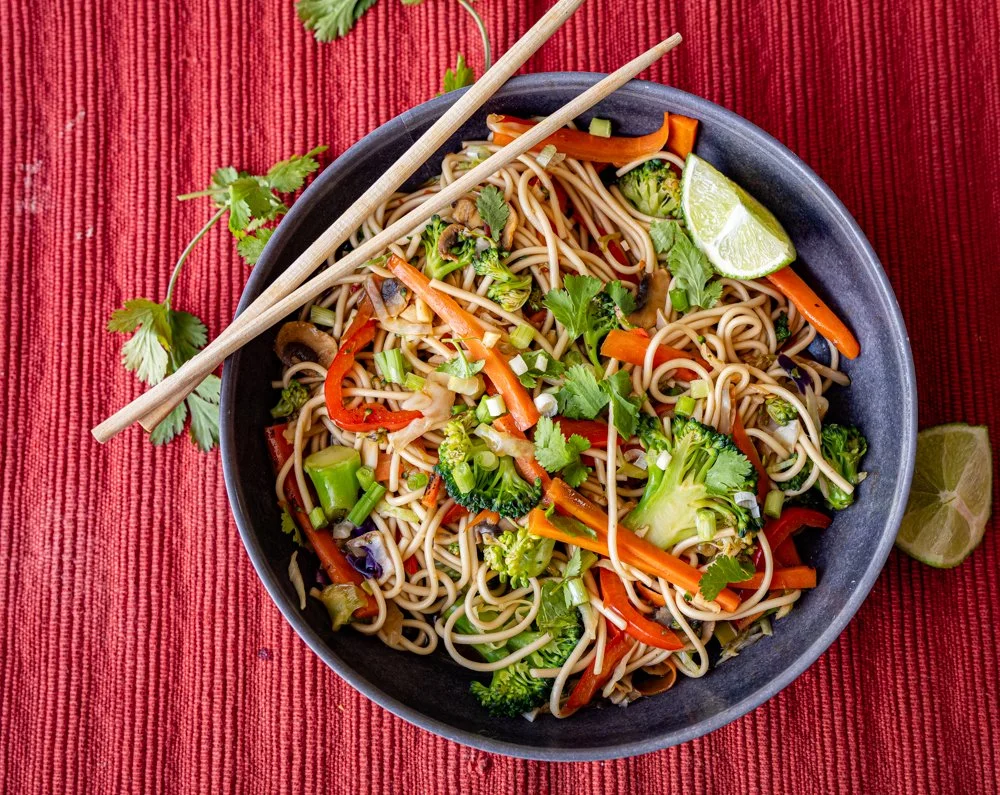
Gung Hay Fat Choy! Tuesday, February 17, marks the start of the Lunar New Year, a 15-day celebration also known as the Spring Festival, and we’re ready to dive in with noodleisciouness. This bountiful, versatile lo mein is intuitive to make and exceptionally easy to tailor to taste. I love a good “throw-it-all-in” dish that can be both a celebration and a fridge clearout, don’t you?
Traditionally, lo mein noodles are made with egg, so in the past I’ve swapped in udon or soba while still calling the yields “lo mein”, purely based on nostalgia for meals I grew up with, I suppose. Something has shifted, though. I’m not sure whether it’s rising costs or plant-based momentum, but lately lo mein noodles have been solely wheat and water —vegan without the conscious label nor the markup they could probably pull off. Silver linings, I know! As an added bonus, over these next two weeks, this lovely lo mein comes with an added layer of symbolism, absolutely qualifying as “longevity noodles”.
The Longevity Noodles Tradition
Asian culture is rich with superstitions, and when it comes to food, I’m all for it. Over Lunar New Year, “lucky foods” feature in—and represent— abundance. Plump dumplings are a natural sign of wealth; bright citrus fruits usher in good luck; and long noodles stretch their way to longevity. I’m frankly one more inclined to aim for “life in your years” over “years of your life”, but regardless, if slurping up yummy noodles may bolster longevity, yay! I do mean slurping, by the way—while there may be a range of preferences as to which noodles are best for longevity, there is broad consensus that they should be consumed in one bite, not cut up.
The most traditional way to enjoy longevity noodles is to keep it super simple. A typical dish might be sprinkled with aromatics, seared, and sauced. It’s the length of the noodles that are central to the auspiciousness. And if we’re truly making connections to longevity, there is no better way to enjoy your noodle dishes than to make them plantifully packed.
Making this Vegan Lo Mein
For my birthday one year, I signed up for the 3-month Forks Over Knives Ultimate Cooking Course, and I’ve been especially conscious of limiting oils since. I actually really love oil-free sautéing; it’s like a hypnotic science experiment in a pan, heating until you achieve a “mercury ball effect” upon adding drops of water, then deglazing as needed with a little liquid. The results are fresher flavors and often brighter colors, too. So, for this dish, I simmer the sauce in a small pot while stir-frying the vegetables using the oil-free sautéing method I learned from Forks Over Knives.
I like to mix the cooked noodles into the sauce first before adding to the vegetable mixture. This order is by no means imperative, but I love the way the noodles evenly absorb the flavor and the vegetables taste truly fresh. And, although I’ve emphasized going oil-free here, I confess that sometimes I’ll add just a touch of sesame oil—maybe a half teaspoon at most—to the sauce at the end, when cooking is complete. The aroma and lightly nutty taste adds a certain something, but it’s not essential—nothing really is, so choose what you love!
Just about any vegetables work beautifully here; the key is to slice thin and compatibly to allow for quick, even cooking time. I like to use bell pepper, julienned carrots, thinly sliced broccoli and mushrooms, and shreded cabbage. Usually I’ll add mukimame and/or cubed, baked tofu for elevated texture and protein. Finishing with spring onions and cilantro really lifts the flavors at the end. The garlicky, gingery sauce is flexible, too. You’ll often see Sriracha in lo mein recipes, but I personally prefer incorporating chili garlic sauce, enjoying both the kick and the appearance of the chili flakes in the dish. Both work great, however! Get playful and experiment!
Welcome Fire Horse
Lunar New Year has always held a certain joyful, bright, spectacular appeal about it that “regular” New Year’s never had. I used to think the difference was all down to that fact that the abrupt shift from warmth and generosity to pressure for a pumped “new you” on January 1 just doesn’t sit well for me. Now I realize that’s only part of it. In contrast to “New Year, New You” messaging, the Lunar New Year represents more of a progression. Last year, the Year of the Snake was a mindful guide for shedding things that didn’t serve us. Now, with the Fire Horse, we’re recharged with forward momentum. We’re not leaving who we were behind so much as we’re continuing the progress. It stirs feelings of excitement and hope—and goodness knows we can all use more of both right now. Wishing you bold, Fire Horse energy and intensity as you forge your next steps heading into spring. xo

Vegan Vegetable Lo Mein
This savory, slippery, umami-rich noodle dish is quick, simple, and packed with vibrant veggies!
Ingredients
- 1/3 Cup low sodium tamari
- 1/3 Cup vegetable stock
- 1-inch piece fresh ginger, grated
- 2 garlic gloves, minced
- 1/2 Tablespoon maple syrup
- 1/2 Tablespoon chili garlic sauce (or Sriracha)
- 1 Tablespoon cornstarch or arrowroot powder.
- 12 ounces vegan lo mein noodles (or sub in udon, soba, rice)
- 1 Cup mushrooms, thinly sliced
- 2 cups broccoli florets, sliced thinly
- 1 red bell pepper, seeded and sliced
- 2 medium carrots, peeled julienned
- 2 Cups shredded cabbage
- Protein-rich addends of choice: 1-2 Cups mukimame and/or cubed baked tofu
- Lime wedges, cilantro, and sliced green onions for garnish
Instructions
- Prepare the noodles according to package directions. Rinse, drain, and set aside.
- Prepare the sauce: Whisk together all the ingredients in a small saucepan and bring to a simmer over medium heat. In a small bowl, mix the cornstarch or arrowroot powder with a tablespoon of cold water to form a slurry. After the sauce has bubbled for a few minutes, add the slurry, whisking to smoothly combine. Continue cooking, stirring often, until the sauce begins to thicken. Reduce heat and keep warm.
- Stir-fry the vegetables: Heat a wok or skillet on medium-high without oil until lightly pouring in water results in a "mercury ball" effect, when the water immediately gathers into a ball. Add the vegetables and stir-fry a few minutes, stirring regularly. Add a little water or vegetable stock as needed to de-glaze the pan and prevent burning. Add edamame and/or baked tofu if using at the end and stir to warm through.
- When the vegetables are tender, add the noodles to the sauce and stir to coat. Then, add the coated noodles to the vegetable mixture. Serve with a lime wedge and sprinkled with sliced green onions and cilantro.
Nutrition Facts
Calories
416Fat
3 gSat. Fat
0 gCarbs
82 gFiber
7 gNet carbs
75 gSugar
9 gProtein
16 gSodium
1567 mgCholesterol
0 mg