Soothing, Light, and Nourishing: Spring Minestrone
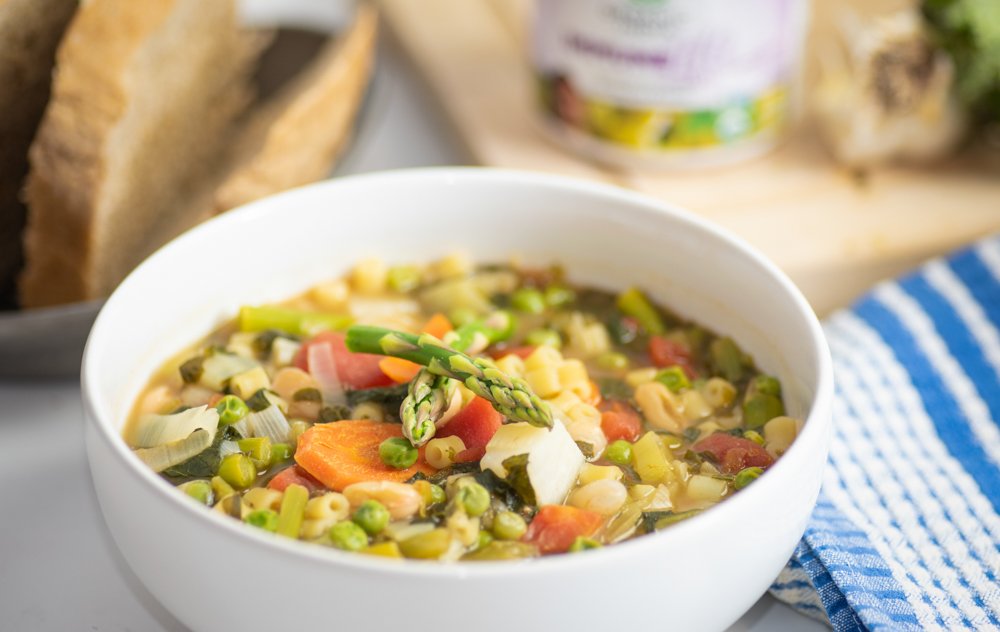
Spring is here—let’s celebrate with nourishing dishes that sing of its renewing softnessI We’ve got a vibrant variety to choose from, including this soup. With tender kale, sweet peas, turnip, and leek, this light take on a classic minestrone is bursting with seasonal flavor and natural goodness.
“Soup Season” may be best recognized as befitting colder months, but a simmering, soothing stockpot is never unwelcome. In this transitional season, as buds pop on limbs and crocuses peek from up from the greening grass, soup has an unexpected chance to shine. Brimming with greens, satisfying without being heavy, we toss what we want into a pot and are rewarded with a simple offering of nurturing in abundance.
This year, greeting spring feels a bit more like shaking off a wintry mindset than actually emerging from winter. Here in Longmont, we didn’t get much more than the occasional flurry. We had to shovel the driveway once or twice, barely. Temperatures in the upper 60s and into the 70s were not uncommon. It felt lovely, of course, and wrong. I guess this stretch emphasized the enduring nature of soup year-round, at least in our house, as we made the most of it regardless of what the weather was doing.
Homemade stock—or not
Lately, I’ve been getting back into making soups with homemade stock again. I used to do this regularly using only veggie scraps, and to be honest, the results were just OK. Maybe even “not great”, not much more flavorful than water; sometimes I even felt wondered if I’d made nothing more than dirty water, or at least water with a little dirt in it? Then I took the Forks Over Knives Ultimate Cooking Course, and we were encouraged to incorporate some fresh veggies and herbs as in addition to frozen scraps, as well as be mindful of the mixture, aiming for harmonious and balanced flavors. Well, on retrospect, that seems a no-brainer—but, in my defense, life is busy! I know you can relate.
Since making homemade stocks for the course, I’ve been getting into a rhythm of taking the time to simmer a batch every other week or so. I typically stick to a variation of the basic stock I’m including in the recipe notes (from Forks Over Knives). It’s always a little different based on from what’s on hand, incorporating scraps I’ve saved in a bag in the freezer and changing up the quantities and/or ingredients according to what’s in the fridge, but thoughtfully now. I’m also enjoying making large batches of Pho stock at intervals. I’ll make enough to both use in whatever soup I’m making in the week plus some to freeze.
Prepping your homemade stock ingredients is pretty low effort, especially when we’re being flexible about quantities and inclusions, so that just leaves finding the time to combine everything and let it simmer. Working from home, this is relatively easy, but if you’re leaving the house for the day, prepping the mixture in advance and planning to simmer later when convenient makes all the difference. Or, of course you can use purchased vegetable broth—no guilt!
Small actions for a more wholesome future
It may sound silly, but squeezing in the making of homemade stock despite always feeling short on time has felt calming. Although much of the country had severe wintry weather, our “California Christmas” was awfully disconcerting. And, areas that endured the bitter cold and snow also showcased that global warming isn’t just a matter of heat—it’s about stability. Global temperatures have risen approximately 1.1°C since the pre-industrial era, a shift that has triggered a significant increase in the frequency and intensity of extreme weather events around the globe, including devastating wildfires and floods, both of which our community is unfortunately familiar with. The melting of polar ice sheets and glaciers contributes to a sea-level rise that threatens coastal communities worldwide, while ocean acidification—driven by the absorption of excess CO2—endangers marine biodiversity and the food security of billions.
Contemplating all of the above can make us feel delirious and helpless. But as with so many pressing issues of our time, we can’t afford to put up blinders. Nor can we drown in hopelessness all the time. What we can do is try our best, fervently holding onto belief that the cumulative effect of individual choices can build momentum to make a real difference. Small shifts in daily habits, scaled across millions of people, has to better our chances for a positive future.
With livestock reduction responsible for roughly 14.5% of global greenhouse emissions, simply shifting to a more plant-forward diet can significantly lower carbon footprint. It doesn’t need to be a full-on vegan one, just more meatless, plant-rich meals supporting your health and the planet’s. Similarly, we can find many, small, humble things to do, not just to feel good, but to propel goodness. Honestly, the quiet act of making homemade stock is kind of therapeutic and reduces packaging. So does purchasing from bulk bins with cloth bags, and doesn’t that bring a sense of fun, like selecting pick-and-mix sweets as a kid? reducing packaging like buying in bulk. Maybe one week we’ll rely on store-bought broth but manage to hang out clothes to dry. We don’t always need to make the same choices, but we must remember that the choices have real value. Let them add a little extra spring in your step, bring you a little lightness, and nourish you. xo

Spring Minestrone
With tender kale, sweet peas, turnip and leek, this light take on classic minestrone is bursting with fresh spring flavor and natural goodness.
Ingredients
- 1 tablespoon extra-virgin olive oil
- 2 garlic cloves, chopped
- 1 small bunch scallions,white and light green parts, thinly sliced
- 1 teaspoon lemon zest
- 4 cups vegetables stock* (see note)
- 2 cups water
- 1 large leek, white and pale green parts only, tough outer layer removed, sliced into ½"-thick rounds
- 1 turnip, peeled and cut into roughly 1-inch cubes
- 1 15-oz. can cannellini beans, rinsed
- 1 15-ounce can diced tomatoes
- 1 small bunch asparagus, cut into 1-inch pieces
- 2 cups chopped kale, fresh or frozen
- 1 cup frozen peas, thawed
- 1 Tbsp. white miso
- 1 Tablespoon Moringa powder, optional
- 2 cups cooked small pasta, such as ditalini
Instructions
- In a large pot, dry-fry the scallions (or use a light coating of cooking spray, stirring often, until they are softened softened, 1-2 minutes. Add garlic and lemon zest and continue to cook, stirring occasionally, 2-3 minutes. Add a little water or stock if needed to prevent sticking to the bottom of the pot.
- Add broth and water to pot and increase heat to medium-high, bringing to a simmer. Add leeks, turnip, beans, tomatoes, and kale and let simmer approximately 10 minutes.
- Add peas and asparagus and continue simmering a further 3-4 minutes.
- Stir in miso and moringa, if using, and cooked pasta into warm soup. Season to taste with sea salt and black pepper.
Notes
I love using homemade stock! I usually use a variation of Forks Over Knives Basic Stock, depending on what I have on hand:
• 4 carrots, peeled and chopped
• 1/2 head celery, chopped
• 2 large onions, chopped
• 8-10 oz leek, white and green parts, chopped
• 3 to 6 cloves garlic, peeled
• 1 tsp black peppercorns
• 2 bay leaves
• 2 qt cold water
• 1/4 cup sun–dried tomatoes
• 1 small handful of fresh parsley
• a few sprigs of thyme
Add all ingredients to a large stockpot. Bring to a boil and lower heat to a simmer. Allow to gently simmer, uncovered, for 1 to 1 1/2 hours.
Nutrition Facts
Calories
496Fat
6 gSat. Fat
1 gCarbs
91 gFiber
23 gNet carbs
68 gSugar
12 gProtein
26 gSodium
464 mgCholesterol
0 mg